LMS
LMS
Last updated on 28th Apr 2026| 4862

- Introduction to Workday HCM Tutorial
- Organizational Management (OM)
- Personnel Administration (PA)
- Time Management (TM)
- Payroll Management
- Recruitment & Talent Management
- Reporting & Analytics
- Conclusion
Introduction to Workday HCM Tutorial
Workday HCM Tutorial (Human Capital Management) is a cloud-based system designed to manage employee data and HR processes efficiently. It centralizes all HR information in one platform, reducing manual paperwork and administrative tasks, while providing secure access to employee records anytime and anywhere. Workday supports scalability for organizations of all sizes and ensures seamless integration of key functions like payroll, recruitment, time tracking, and talent management. This integration allows for smooth data flow between HR modules, automates routine tasks, improves accuracy, and facilitates strategic workforce planning. Workday HCM Training provides real-time insights and simplifies HR operations by offering dashboards and analytics for quick decision-making. Payroll Management tracks key HR metrics such as turnover, attendance, and performance, helping managers monitor workforce trends and take prompt action. The system also supports compliance with labor laws and organizational policies, ensuring transparency and accountability in HR processes. Additionally, Workday helps organizations manage the entire employee lifecycle efficiently—from recruitment and onboarding to promotions, transfers, and offboarding—while enhancing employee engagement through self-service features. Overall, it provides a complete and accurate record of employees, streamlining HR management and enabling better decision-making for the organization.
Organizational Management (OM)
- Organizational Structure Definition: Defines the company’s hierarchy and structure by establishing the overall organizational framework. Helps visualize levels of management and reporting, supports strategic planning and organizational growth, and provides a clear structure for HR and business processes.
- Department and Team Representation: Represents departments, teams, and business units by organizing employees into functional groups. Helps monitor departmental performance, facilitates effective communication across teams, and enables better resource and workload management in Workday Finance, supporting accurate cost allocation and financial planning across the organization.
- Position and Role Management: Manages positions, roles, and reporting relationships by defining responsibilities for each role. Ensures proper alignment of employees with positions, helps automate approvals and workflows based on reporting lines, and supports succession planning and role clarity.
- Employee Position Tracking: Tracks employees assigned to specific positions and maintains up-to-date records. Assists in identifying vacancies and workforce gaps, helps plan promotions, transfers, and role changes, and ensures accurate reporting and accountability.
- Workflow and Authority Management: Supports workflow approvals and delegation of authority by automating HR tasks and request approvals. Ensures tasks are handled by the right authority, improves efficiency, reduces manual intervention, and enhances transparency in HR decision-making.
Looking to earn your Workday certification? Take a look at the Workday Certification Course offered by ACTE today!
Personnel Administration (PA)
Personnel Administration (PA) in Workday HCM manages all essential employee information throughout their lifecycle in the organization. It covers activities such as hiring, transfers, promotions, salary updates, and terminations. PA stores structured employee records, including personal details, job information, organizational assignments, and compensation data, ensuring accuracy and accessibility. This module integrates seamlessly with other Workday modules like Organizational Management, Time Tracking, and Payroll, allowing smooth data flow and reducing manual errors. In Workday HCM Training , PA is a key concept that helps learners understand how employee data is managed effectively within the system. By automating employee record management and standardizing HR processes, PA enhances operational efficiency, supports compliance with company policies and legal requirements, and provides HR and management teams with reliable data for informed decision-making. Additionally, PA helps maintain a complete history of employee changes for auditing and reporting purposes. It enables quick updates to employee records without delays, allowing managers to access accurate data and make timely HR decisions. Overall, PA improves employee experience by ensuring information is up-to-date and easily accessible
To achieve your Workday certification, gain knowledge from top AWS experts and enhance your career with ACTE’s Workday Training .
Time Management (TM)
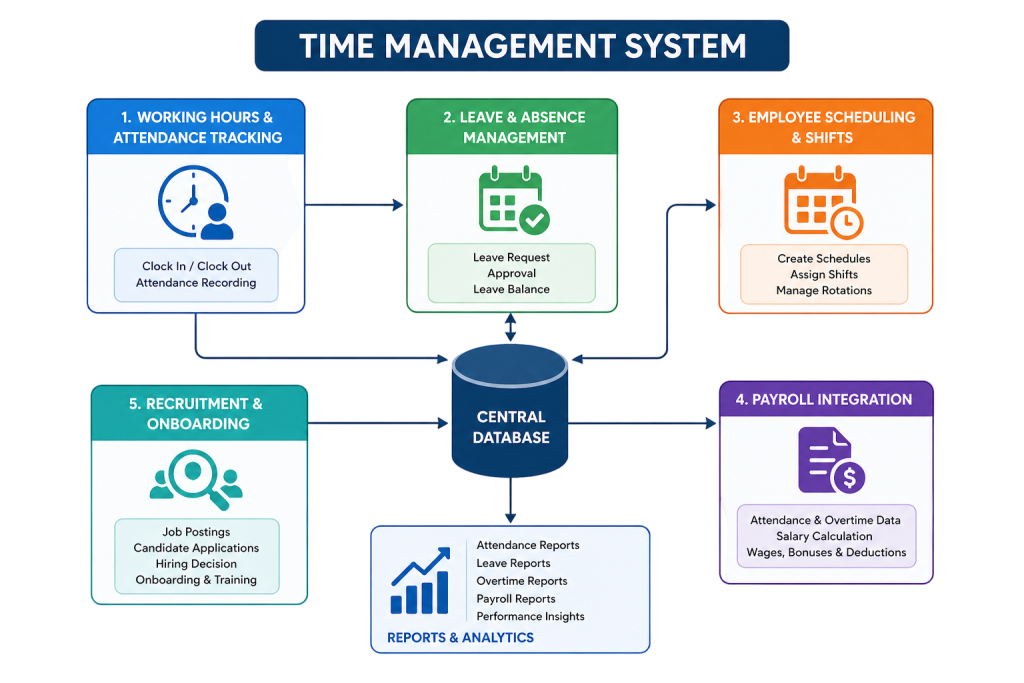
- Working Hours & Attendance Tracking: Tracks working hours, attendance, and overtime while monitoring employee clock-in and clock-out times accurately. Helps identify patterns in punctuality and productivity, supports reporting for performance evaluations and compliance, and ensures transparency and accountability in workforce management.
- Leave & Absence Management: Manages leave requests and absence tracking, including vacation, sick leave, and personal days. Keeps track of leave balances and approvals in real-time, helps prevent scheduling conflicts, and reduces manual HR work and errors.
- Employee Scheduling & Shifts: Defines employee schedules, standard working hours, and flexible or rotating shifts. Supports workforce planning, helps manage workload distribution, and improves operational efficiency by aligning resources with business needs.
- Payroll Integration: Integrates attendance and overtime data with payroll to ensure accurate salary calculations. Ensures proper computation of wages, bonuses, and deductions while reducing errors and delays and maintaining compliance with labor laws and company policies.
- Recruitment & Onboarding: Manages job postings, candidate applications, and selection processes. Tracks recruitment workflows from application to hiring decision and supports onboarding by providing necessary information, tasks, and training to help new hires integrate efficiently.
Payroll Management
Calculates employee salaries including deductions and bonuses, maintains payroll control records for structured processing, and generates payslips while updating financial accounting, ensuring compliance with tax laws and company policies in Workday HCM Training Payroll Management integrates with Time Management to ensure accurate attendance and overtime data, helping automate recurring payroll tasks, reduce manual errors, and provide detailed payroll reports for audits and management review. It ensures employees are paid accurately and on time, improving trust and satisfaction. Workday HCM supports multiple payroll cycles, enables adjustments for bonuses, incentives, and retroactive payments, tracks statutory contributions like taxes and provident fund, and provides secure payroll processing with role-based access while helping HR and finance teams coordinate effectively for financial planning.

Get JOB Oriented Workday Training for Beginners By MNC Experts
- Instructor-led Sessions
- Real-life Case Studies
- Assignments
Recruitment & Talent Management
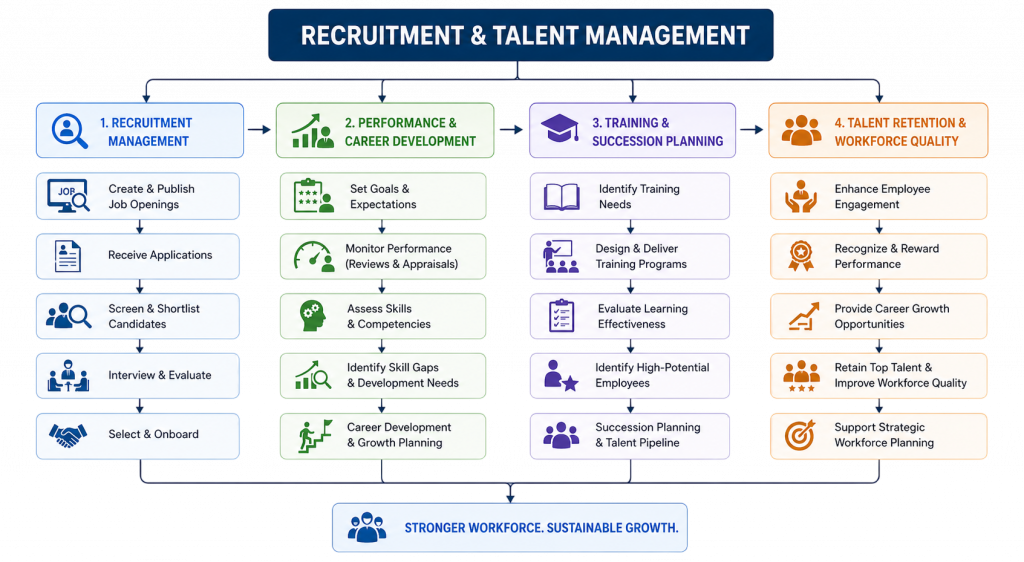
- Recruitment Management: Manages job postings, applications, and candidate selection, streamlining the hiring process from vacancy to onboarding. Enables efficient screening and shortlisting of candidates while improving the quality of hires through tracking candidate data and evaluation metrics.
- Performance & Career Development:Tracks employee performance, skills, and career growth through regular reviews and appraisals. Identifies skill gaps and training needs, helping employees align their goals with organizational objectives in Workday Payroll, ensuring performance-based inputs are accurately reflected in compensation, bonuses, and salary adjustments.
- Training & Succession Planning: Supports training programs and succession planning by organizing learning and development initiatives. Prepares high-potential employees for future roles and ensures continuity in key positions through internal talent pipelines.
- Talent Retention & Workforce Quality: Helps organizations retain top talent and improve workforce quality by enhancing employee engagement through career growth opportunities. Reduces turnover by recognizing and rewarding performance and supports long-term strategic workforce planning.
Reporting & Analytics
- Real-Time HR Insights: Provides instant access to up-to-date employee information, enabling managers to monitor workforce trends as they happen. Ensures timely decision-making without waiting for batch reports and supports proactive management of HR issues such as absenteeism and skill gaps.
- Standard and Custom Reports: Generates standard reports like employee lists, payroll summaries, leave balances, and attendance reports. Workday Allows creation of custom reports based on organizational needs using filters and Worktags (e.g., Department, Cost Center, Job Role) for precise data analysis and informed decision-making.
- Key Metrics Tracking: Tracks important workforce metrics by identifying patterns in employee behavior and retention. Monitors absenteeism and overtime to improve productivity, analyzes performance trends for evaluations and promotions, and provides insights for training, succession planning, and workforce optimization.
- Strategic Planning Support: Supports strategic planning by helping forecast hiring needs and resource allocation. Identifies skill and talent gaps to guide learning and development programs, improves operational efficiency by reducing manual reporting and errors, and enhances HR strategies with actionable insights.
Want to Learn About DevOps? Explore Our Workday Interview Questions and Answers Featuring the Most Frequently Asked Questions in Job Interviews.
Conclusion
Workday Human Capital Management simplifies HR management by integrating employee data, payroll, time tracking, and analytics in a single system. Its real-time reporting, self-service features, and automation improve accuracy, efficiency, and employee experience. Learning Workday HCM Training equips freshers with essential skills for managing modern HR processes and contributes to strategic workforce management. It helps organizations make data-driven decisions for workforce planning and development. It reduces administrative workload, allowing HR teams to focus on strategic initiatives. Overall, Workday HCM Tutorial empowers both employees and managers, fostering a more productive and engaged workforce.